Don't invest unless you're prepared to lose money. This is a high-risk investment. You may not be able to access your money easily and are unlikely to be protected if something goes wrong. Take 2 mins to learn more.

Menu

Don't invest unless you're prepared to lose money. This is a high-risk investment. You may not be able to access your money easily and are unlikely to be protected if something goes wrong. Take 2 mins to learn more.
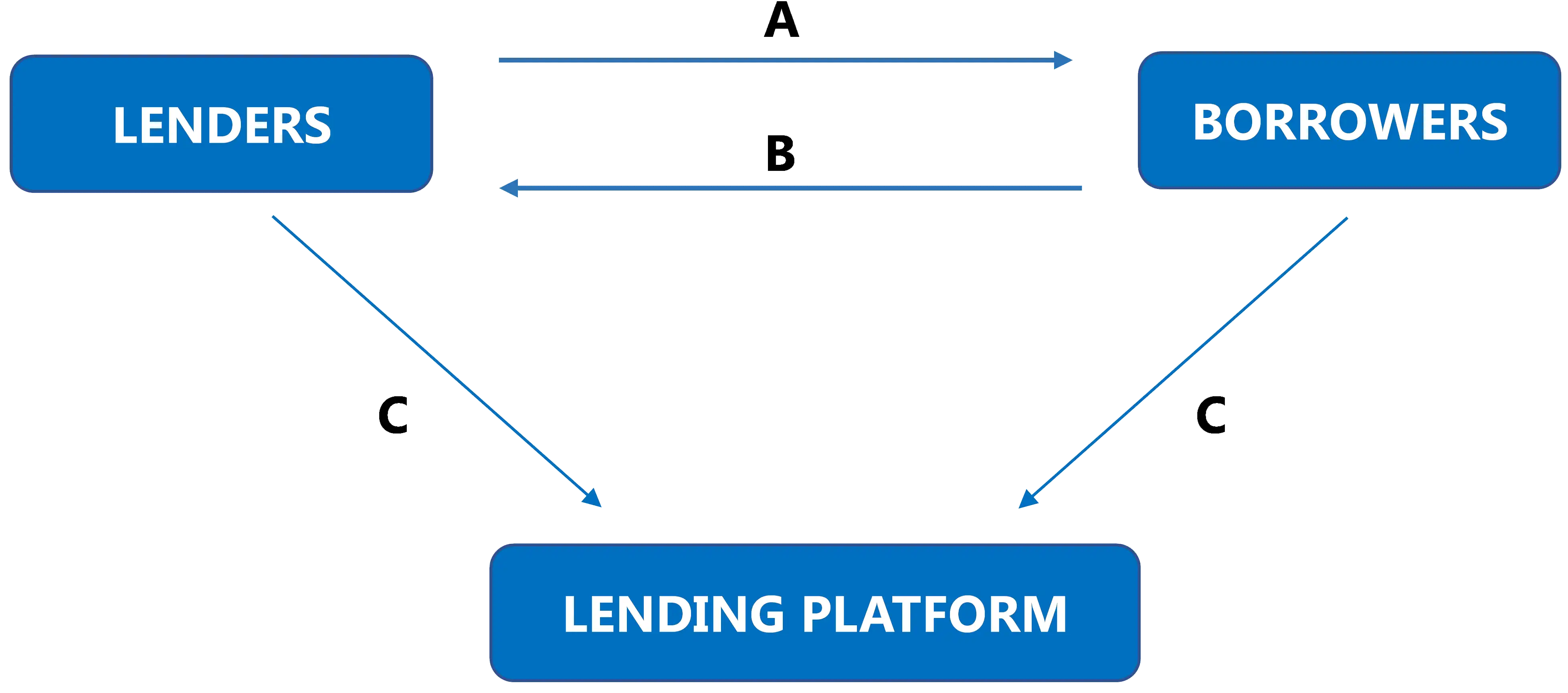
P2P lending is the practice of lending money to unrelated individuals, "peers", without going through a traditional financial intermediary such as a bank or other traditional financial institutions. Significant cost saving can be achieved by virtue of removing the middlemen associated with a typical loan transaction, such as brokers. This benefits both lenders, which are able to receive a higher rate on their money than keeping it in a bank account, and borrowers, that are able to raise financing quicker and cheaper than using traditional lenders.
This graphic provides a simplified overview of how P2P lending works: